
What does it mean to be an art curator?
It pains me to see words like “curator” and “artist” thrown around so carelessly. It’s like writing a single poem and calling yourself a poet, writing a short story and calling yourself a writer, making breakfast and suddenly becoming a chef (?)
Why does this happen? Sometimes because people simply don’t care to understand the difference. But more often because everyone wants to call themselves something, to be someone — and truly earning that title takes time, experience, and usually a long journey. Why go through all that when you can skip every stage and simply declare yourself - doesn't matter that in words only - whatever you want to be?
That is one of the unfortunate realities of our time. You can call yourself anything — but definitions do not disappear because of it. And if you ignore what those words actually mean, you will always remain a pseudo-version of the thing you claim to be. What for?
If you gathered artworks and hung them in a room — you are not a curator.
If you gathered artworks and hung them in a beautiful room — you are still not a curator.
If you do not carefully select artists, but instead exhibit anyone willing to pay for a spot — please do not call yourself a curator. Do not distort the meaning of the word with such a shallow approach.
If you rent a space, gather artists, and cram in as many works as physically possible — I don’t know who you are, but certainly not a curator.
If you have heard words like “concept,” “narrative,” or “a breathing space,” but do not understand why they matter — then you are not speaking about curating. And if you have never even encountered these ideas, then perhaps you are not speaking about art at all.
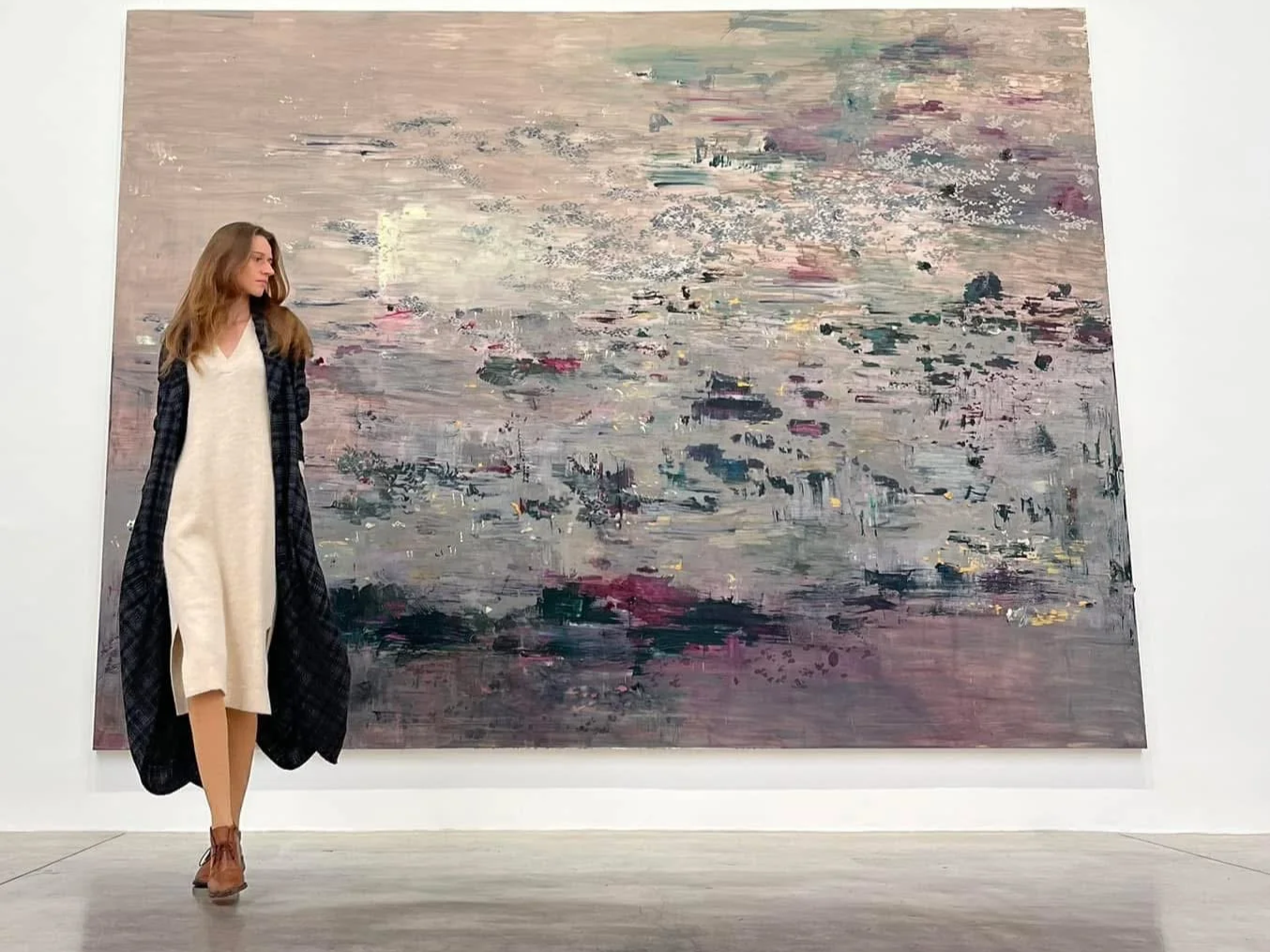
To be a curator is to feel rhythm, connection, dialogue, and tension between works. It is to guide the viewer through a journey within art itself. It is to create new meanings, new relationships between elements, revealing unexpected dimensions and perspectives within both new and long-existing works.
It is storytelling without speaking a single word.
It is revealing hidden depths without directly pointing at them.
A truly curated exhibition changes the viewer. A person enters the space as one version of themselves and leaves slightly — or entirely — transformed.
Art is capable of speaking to us on every level. We only need to allow it into our perception of the world. And the curator helps make that possible. A curator teaches us to read between the lines — between the works themselves. They teach us to notice what remained unseen for so long, or what we always sensed but were afraid to admit to ourselves.
A curator writes a story — only instead of words, they use artworks.
And here, everything matters:where a piece is placed,how it is lit,how much space surrounds it,the distance between works,the architecture of the space itself,the colors,the shadows,the forms,the scale,the visual rhythm,the music,the ceilings,the view from the windows —or perhaps the absence of windows entirely (Why?) The typography of the exhibition text.The title of the exhibition. How the works are presented in the catalogue. What is emphasized, and why something else remains almost invisible.
Curatorship does not begin with the opening night, nor does it end when the exhibition closes.
It begins long before — at the moment the idea is born — and continues long after, through reinterpretations, reflections, conversations, and emotional afterimages that persist beyond the official lifespan of the exhibition.
And the greatest curatorial projects never truly end at all. Because they leave a permanent mark on those who encounter them.
To truly call yourself something requires experience, time, and depth. And when you are ready to call yourself an Artist, a Curator, or a Writer — you will feel it. Until then, please treat these words with care.